Small kitchens can be surprisingly beautiful. The challenge isn’t always the number of cabinets or the size of the room. It’s figuring out how to make every inch work without making the space feel crowded.
The best kitchen design ideas for a small room usually combine practical storage with a light, intentional look. A narrow counter can still feel luxurious when it’s kept clear. A tiny kitchen can still have personality when the decor is chosen carefully. And even a rental kitchen can feel more organized with a few thoughtful changes.
If you’re decorating a compact apartment kitchen, a small galley kitchen, or simply trying to make a busy kitchen easier to use, these 30 ideas can help. Some involve layout and storage, while others are small styling changes that make the entire room feel more open.
30 Small Kitchen Ideas That Make Every Inch Count
1. Use Light Colors on the Walls and Cabinets
One of the simplest ways to make a small kitchen feel more spacious is to keep the main surfaces light.
Soft white, warm cream, pale beige, light gray, and muted sage can all work beautifully. Light colors reflect more of the available light, which can make walls and cabinetry feel less visually heavy.
You don’t have to make everything stark white. In fact, a warm ivory cabinet paired with natural wood accessories can feel much softer and more inviting.
If your kitchen already has dark cabinets, you don’t necessarily need to replace them. Try keeping the walls, backsplash, and larger accessories lighter so the room has some visual balance.
2. Take Cabinets All the Way to the Ceiling
The area above kitchen cabinets often becomes a collection point for dust, random containers, and things you rarely use.
If you’re renovating, consider extending your upper cabinets closer to the ceiling. This creates additional storage while giving the kitchen a more finished appearance.
The highest shelves can hold items you don’t use every day, such as serving dishes for special occasions. Keep everyday plates, glasses, and cooking essentials within easy reach.
For an existing kitchen, even a simple tall storage cabinet can provide a similar benefit without changing the entire cabinetry layout.
Also read: 25 Beautiful Kitchen Design Ideas for a Stylish Home
3. Choose Open Shelving Carefully
Open shelving can make a small kitchen feel visually lighter because it doesn’t create the same solid wall of cabinetry.
The trick is restraint.
Instead of filling every shelf with dishes, appliances, jars, and decorative objects, leave some breathing room. A small stack of everyday plates, a few glasses, and one or two decorative pieces may be enough.
Open shelving works particularly well when the items displayed have a similar color palette. Cream ceramics, wooden boards, glass jars, and neutral textiles create a calm look without feeling overly decorated.
4. Add a Narrow Rolling Cart
A rolling kitchen cart can be incredibly useful when you don’t have enough counter space.
Choose a slim design that fits beside the refrigerator, against an unused wall, or at the end of a cabinet run. It can hold fruit, coffee supplies, cooking utensils, or pantry items.
The best part is flexibility. When you need extra workspace, roll it into position. When you need more floor space, move it somewhere else.
For a rental, this is one of the easier kitchen decor upgrades because it doesn’t require permanent installation.
5. Install a Slim Magnetic Storage Strip
A small magnetic strip can help free up valuable drawer and counter space.
It can hold metal kitchen tools that you use frequently, keeping them within reach while eliminating the need for another container on the counter.
Placement matters. Install it somewhere convenient but away from areas where it could interfere with cooking or become difficult to clean.
The goal isn’t to display every utensil you own. Keep only the tools you regularly reach for.
6. Make the Backsplash Work Harder
A backsplash doesn’t have to be purely decorative.
If you’re remodeling, consider using part of the backsplash area for practical storage. Small rails, hooks, or carefully placed shelves can hold lightweight everyday items.
For a softer feminine kitchen, a simple tile backsplash in warm white or creamy tones can provide the visual background, while small wood or brass-toned accessories add warmth.
The key is to avoid covering every available surface with storage. A small kitchen needs useful organization, but it also needs visual breathing room.
7. Use the Space Beside the Refrigerator
That narrow gap beside a refrigerator can be easy to overlook.
If the space is wide enough, a slim rolling pantry or narrow shelving unit can turn it into useful storage for spices, canned goods, baking supplies, or bottles.
Before adding anything, measure the gap carefully, including door clearance. You don’t want a storage solution that prevents the refrigerator or nearby cabinet from opening properly.
This is a good example of how small kitchen organization often comes down to noticing spaces that are already there.
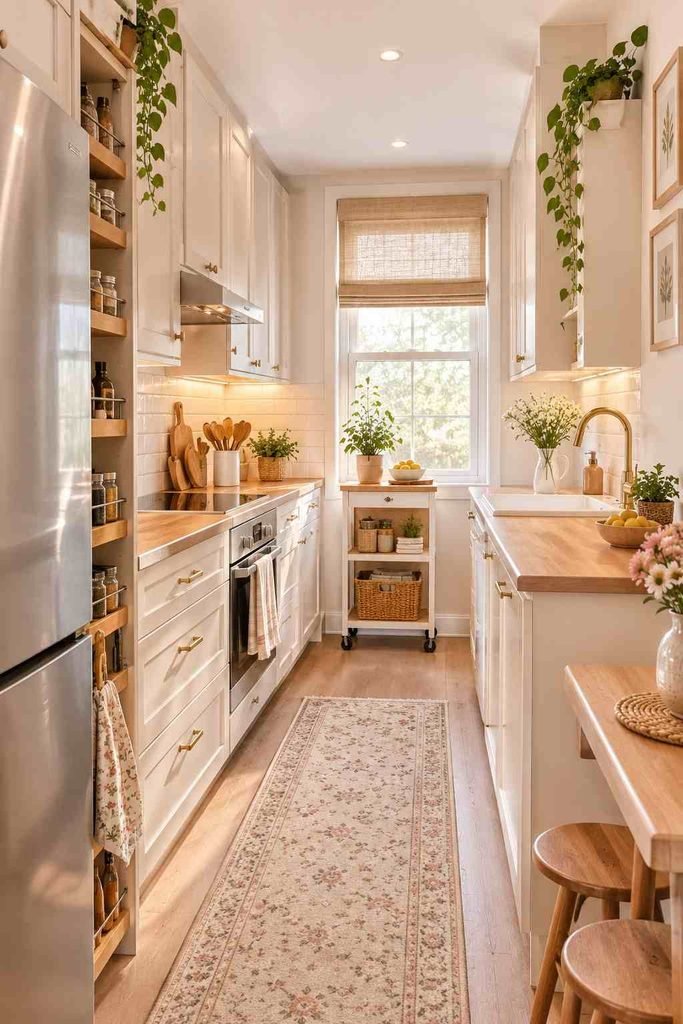
Kitchen Design Ideas for Better Storage
8. Use Drawer Organizers
Deep kitchen drawers can quickly become messy when utensils are thrown together.
Drawer dividers create separate sections for cooking tools, cutlery, measuring spoons, and other small items. This makes it much easier to find what you need without moving everything around.
For a small kitchen, organization matters because clutter takes up more than physical space. It also makes the room feel visually busier.
Keep frequently used items in the easiest-to-reach drawers. Less-used tools can go farther away.
9. Store Pots Inside One Another
Pots and pans can consume a surprising amount of cabinet space.
Where possible, stack compatible pots inside each other. Keep lids organized separately or use a lid organizer so they don’t create an awkward pile.
You can also use vertical dividers to store flat pans, cutting boards, and baking sheets upright rather than stacking them.
This makes better use of cabinet height and saves you from having to pull out an entire stack when you need one pan.
10. Use the Inside of Cabinet Doors
The inside of a cabinet door is valuable storage real estate.
A slim organizer can hold measuring cups, cleaning supplies, small kitchen tools, or packets of frequently used ingredients.
Just check that the added storage doesn’t prevent the door from closing. In very compact kitchens, even a few extra centimeters can make a difference.
This approach works especially well when you want more storage without adding another piece of furniture.
11. Add a Corner Shelf
Kitchen corners can become awkward dead zones.
A small corner shelf can turn that unused area into a practical spot for mugs, spices, cookbooks, or decorative ceramics.
If your counters are already busy, consider a wall-mounted corner shelf instead of a countertop version.
Keep the styling simple. Three or four useful pieces usually look better than a crowded collection.
12. Create a Dedicated Coffee or Tea Station
If you regularly make coffee or tea, grouping those supplies together can make the kitchen feel more organized.
A small tray can hold your kettle, mugs, tea, coffee, and a jar of sweetener. If counter space is limited, use a narrow shelf or small cart instead.
This also keeps one category of items from spreading throughout the kitchen.
For a feminine editorial look, try combining neutral ceramics with a wooden tray and one small plant or vase.
13. Choose Stackable Containers
Uniform containers can make pantry storage much easier to manage.
Look for containers that stack securely and fit your shelves. Square or rectangular shapes often use shelf space more efficiently than a collection of unrelated containers.
Labeling can also help, especially if you keep dry ingredients together.
You don’t need to transfer every pantry item into matching containers. Start with the foods you use most often and organize from there.
14. Use a Pegboard for Flexible Storage
A pegboard can turn an empty wall into adjustable storage.
Hooks and small shelves can hold lightweight utensils, cutting boards, kitchen towels, or small baskets.
It’s especially useful if your storage needs change frequently because the arrangement can be adjusted without installing a completely new system.
Choose a simple finish that works with your kitchen rather than treating the pegboard as an additional focal point.
Small Kitchen Ideas That Improve the Layout
15. Keep the Main Counter as Clear as Possible
A clear counter can make a small kitchen look dramatically larger.
Instead of keeping every appliance out, consider which ones you actually use daily. A coffee maker you use every morning may deserve permanent counter space. A blender used twice a month might be better stored away.
This doesn’t mean your kitchen needs to look empty. A fruit bowl, cutting board, small vase, or lamp can add personality without creating clutter.
One thing I’ve found particularly helpful in compact kitchens is giving every visible object a reason to be there.
16. Pick One Statement Element
Small spaces don’t need lots of decoration to feel stylish.
Instead, choose one feature that catches the eye. It could be a beautiful pendant light, a patterned backsplash, an unusual piece of artwork, or a row of open shelves.
Once you have that focal point, keep the surrounding areas relatively calm.
This prevents the room from feeling like several different decorating ideas are competing for attention.
17. Use a Small Drop-Leaf Table
If your kitchen needs a dining or breakfast area, a traditional table may take up too much floor space.
A drop-leaf table can stay compact when you’re moving around the kitchen and open when you need a place to eat or work.
Pair it with lightweight chairs that can slide underneath when they’re not being used.
This is especially practical in studio apartments and narrow kitchens where the kitchen and dining area share one room.
18. Try a Narrow Kitchen Island
A full-size island isn’t always necessary.
A slim island can provide extra prep space, storage, and even casual seating while taking up much less room.
Before choosing one, leave enough space for cabinet doors and appliances to open comfortably. A beautiful island isn’t useful if it turns the kitchen into a narrow passage.
If floor space is extremely limited, a movable island may be more practical than a fixed one.
19. Use a Peninsula Instead of an Island
If your kitchen connects to another room, a peninsula can sometimes provide the benefits of an island without requiring space on all four sides.
It can create additional counter space while visually defining the kitchen from the living or dining area.
A small overhang can also create a casual breakfast spot if the layout allows it.
20. Think Vertically, Not Just Horizontally
When floor space is limited, look upward.
Tall shelves, wall rails, upper cabinets, hanging storage, and narrow pantry units can all increase storage without taking away valuable walking space.
This is one of the most useful principles behind practical kitchen design ideas for compact homes.
Before buying another cabinet, look at your walls. There may be unused vertical space that can solve the problem.
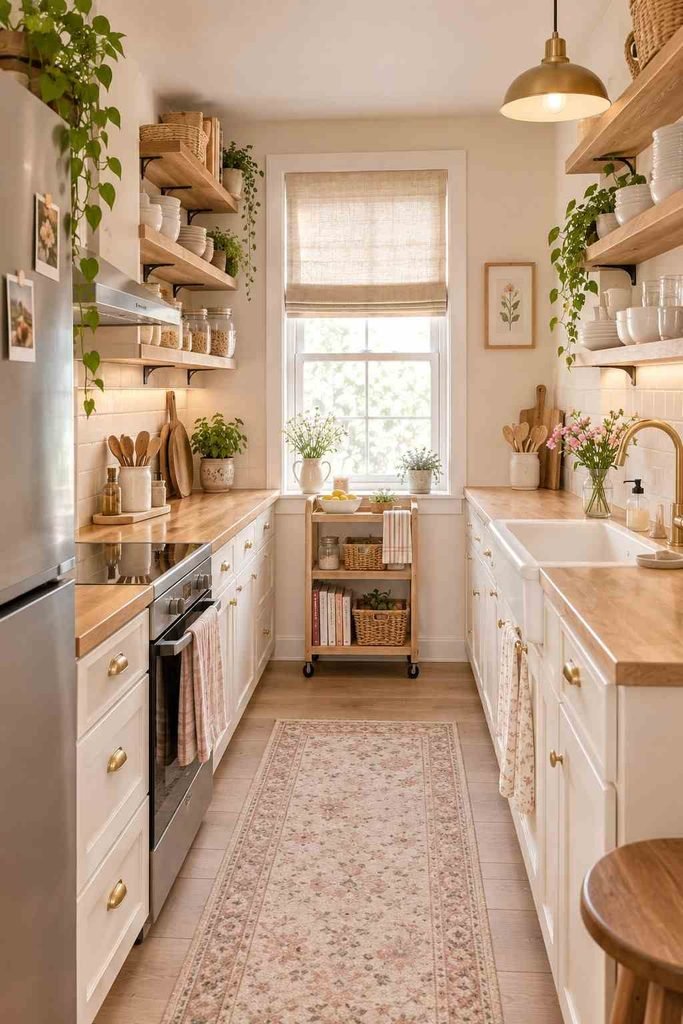
Kitchen Decor Ideas for a Stylish Small Space
21. Add a Small Runner Rug
A narrow runner can add warmth and softness to a compact kitchen.
Choose a washable or easy-care style that fits the proportions of the room. A subtle pattern can hide everyday marks better than a completely plain rug.
For a feminine kitchen, muted floral patterns, vintage-inspired designs, or simple geometric prints can work beautifully without making the room feel overly themed.
Make sure the rug doesn’t interfere with cabinet doors or create a tripping hazard.
22. Bring in Natural Wood
Wooden details can prevent a small kitchen from feeling cold, especially when the main palette is white or gray.
A wooden cutting board, stool, tray, shelf, or utensil holder can introduce warmth without requiring a major renovation.
Try to repeat the wood tone in a few places rather than using many unrelated finishes. A consistent material palette makes a small room feel more intentional.
23. Use Glass to Keep the Room Feeling Open
Glass cabinet doors can visually break up a long row of solid cabinets.
They’re particularly effective for displaying attractive everyday pieces such as glassware or simple ceramics.
If you’re worried about the cabinet becoming messy, use glass doors only on one or two sections rather than throughout the entire kitchen.
You can achieve a similar effect with a glass pendant light or a transparent dining chair.
24. Hang One or Two Pieces of Art
Kitchen walls are often overlooked when decorating.
A small framed print can add personality to an empty wall, especially if the kitchen already has a simple neutral palette.
Choose artwork that complements the room rather than competing with it. Botanical illustrations, food-inspired prints, abstract shapes, or soft feminine artwork can work well.
Keep artwork away from areas where steam, grease, or splashes could damage it.
25. Add Greenery Without Taking Over the Counter
Plants can bring life into a small kitchen, but large pots can quickly consume valuable workspace.
Instead, consider a small herb pot near a suitable window or a compact plant on an open shelf.
If natural light is limited, choose decor that doesn’t depend on a plant’s survival. A small vase with seasonal branches or dried stems can provide a similar decorative effect.
The idea is to add one living or natural element, not turn the kitchen into a greenhouse.
26. Choose One Consistent Hardware Finish
Cabinet handles may be small, but they have a noticeable effect on the overall look of a kitchen.
Using one consistent finish can make the space feel more cohesive. Warm metallic finishes can complement cream and wood, while simple dark hardware can create contrast against light cabinets.
You don’t need to replace every handle immediately. If the existing hardware is functional, this can simply be something to consider during your next update.
27. Use Soft Lighting Layers
Good lighting can change how a small kitchen feels at night.
Instead of relying entirely on one ceiling fixture, combine overhead lighting with under-cabinet lighting or a small decorative lamp in a safe, appropriate location.
Warm lighting can make cream, wood, and neutral finishes feel especially cozy.
Think about the areas where you actually work. The counter where you chop vegetables needs practical illumination, while a dining corner can have softer decorative lighting.
28. Keep Decorative Objects Similar in Scale
A tiny kitchen can look cluttered when decorative pieces are all different sizes and shapes.
Instead, try grouping a few objects with similar proportions. For example, a small vase, wooden board, and ceramic container can create a simple arrangement without overwhelming the counter.
Leave some empty space around the arrangement.
That empty space is part of the design.
Smart Finishing Touches for a Small Kitchen
29. Use Mirrors Strategically
A mirror can reflect light and create the impression of additional visual space.
You don’t need a huge mirror in the kitchen. A small decorative mirror on a suitable wall or near a dining area may be enough.
Position matters. A mirror facing a bright window or an attractive part of the room can be more effective than one reflecting a cluttered counter.
If cooking splashes are likely to reach the area, choose a location that’s easy to clean.
30. Declutter Before You Decorate
This might be the least glamorous idea on the list, but it’s one of the most useful.
Before adding storage boxes, shelves, baskets, and decorative accessories, take everything out and decide what you actually use.
Ask yourself:
- Have I used this recently?
- Do I own several versions of the same thing?
- Is this taking up valuable everyday storage?
- Would I buy this item again today?
- Does it need to stay in the kitchen?
A small kitchen becomes much easier to style when you’re working with fewer unnecessary items.
Once you’ve cleared the excess, you’ll know what storage you actually need. You may even discover that you don’t need as many new organizers as you expected.
How to Make a Small Kitchen Feel Bigger
The best small kitchen ideas don’t necessarily involve expensive renovations. Often, the feeling of spaciousness comes from a few visual decisions working together.
Start with the largest surfaces. Light cabinets, walls, and backsplashes create a quieter visual background. Then reduce countertop clutter so the eye can move easily across the room.
Next, use vertical storage where possible. This keeps useful items off the floor and gives the kitchen more functional capacity without making it wider.
Lighting also matters. Dark corners can make a compact room feel smaller, while layered lighting helps the space feel more open and comfortable after sunset.
Finally, pay attention to the floor. Too many patterns, colors, and materials can make a small room feel visually fragmented. A restrained palette usually creates a calmer result.
You don’t have to make every part of the kitchen match perfectly. A little contrast gives the room character. The goal is simply to make the different elements feel like they belong together.
A Simple Small Kitchen Styling Formula
If you’re starting from scratch and don’t know where to begin, keep the process simple.
Choose a base color first. Warm white, cream, beige, pale gray, or another soft neutral can work as the foundation.
Add one natural material, such as wood.
Choose one accent finish for hardware and small accessories.
Then introduce one decorative element that gives the kitchen personality. This might be artwork, a patterned runner, greenery, or a pretty backsplash.
From there, focus on storage.
Keep frequently used items within easy reach and store occasional-use items higher or farther away. Don’t sacrifice the most convenient storage locations for decorative pieces.
A small kitchen should ultimately be easy to use. If you have to move five decorative objects every time you prepare breakfast, the styling has gone too far.
What to Avoid in a Small Kitchen
Not every popular decorating idea works well in a compact space.
Oversized furniture is one common problem. A large island or dining table can leave too little room to move around.
Too many open shelves can also create visual clutter. They’re attractive when styled carefully, but they require more discipline than closed cabinets.
Another issue is buying storage without measuring first. Always check the width, height, depth, door clearance, and walking space before bringing a new organizer or cabinet home.
It’s also worth avoiding a room full of competing finishes. If you have patterned tiles, colorful appliances, decorative artwork, multiple metal finishes, and several types of wood all in one small kitchen, the result can feel busy.
Instead, choose a few elements you genuinely love and let them stand out.
Creating a Girly Kitchen Without Making It Overly Themed
For a softer feminine look, you don’t need everything to be pink or covered in floral prints.
A more sophisticated approach is to use subtle feminine details. Think creamy cabinets, soft blush accessories, warm wood, delicate glassware, small floral arrangements, curved shapes, and elegant lighting.
You can also introduce color through textiles and removable accessories rather than permanent finishes.
A pale rose runner, soft green dish towels, cream ceramics, or a small floral print can add personality without dominating the room.
This approach works particularly well for young women decorating apartments, bedrooms with kitchenette areas, or first homes where the space needs to feel personal without looking overly decorated.
Final Thoughts
A small kitchen doesn’t need to have a complicated layout or expensive finishes to feel beautiful. The biggest difference often comes from using the space intentionally.
Look upward when you need storage. Keep the counters useful and relatively clear. Choose furniture that fits the room rather than forcing a large piece into a small footprint. Then add a few personal details that make the kitchen feel like yours.
The most successful kitchen design ideas balance practicality with personality. You should be able to cook comfortably, find what you need, clean without moving a mountain of objects, and still enjoy how the room looks.
Start with one problem area rather than trying to change everything at once. Organize the drawer that’s always messy. Clear the counter. Add a slim shelf. Improve the lighting. Once those small changes begin working together, even a limited kitchen can feel surprisingly spacious, organized, and inviting.